


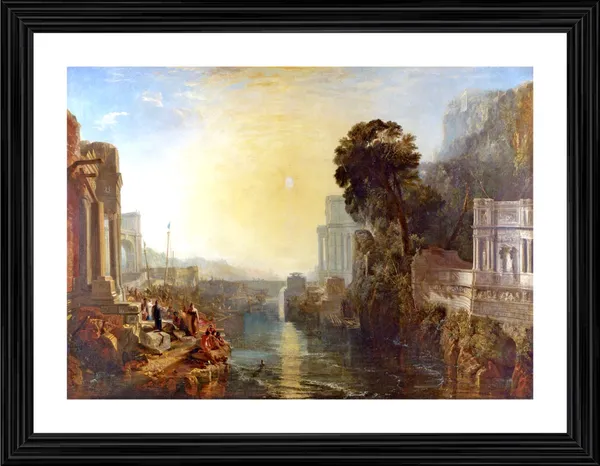



The Rise of the Carthaginian Empire, A Painting by JMW Turner, Wall D�cor, ..More
₹1,199
₹6,967
82% OffHurry Up, Shop Now!
0H:0M:0S
Final Price inclusive of all taxes
Cash on Delivery
Free Delivery
Get it delivered in 4-9 days
size
14x18 In
16x21 In
18x24 In
Product Information
Brand
DECORATUS
Attribute Name
'DECORATUS' curated selection of 5000+ Wall Decor Frames, Paintings & Themes caters to diverse tastes and decor styles. Prompt response to enquiries. Transparent Deals. Custom themes and discounts for bulk purchase
Product Description
The Rise of the Carthaginian Empire (1815) : This painting is one of Turner's most important works, greatly influenced by the luminous classical landscapes of�Claude Lorrain. Carthage was the capital city of the ancient Carthaginian civilization while Dido, according to ancient sources, was the founder and first queen of Carthage.The subject of the painting is inspired by Aeneid, a Latin epic poem written by Virgil. It depicts the building of the North African city of Carthage with Dido being the blue and white figure on the left. The figure in front of her, wearing armour and facing away from the viewer, may be her�Trojan�lover�Aeneas. Some children are playing with a flimsy toy boat in the water, symbolising the growing but fragile naval power of Carthage, while the tomb of her dead husband�Sychaeus, on the right side of the painting, on the other bank of the estuary, foreshadows the eventual doom of Carthage. Top half of the painting dominated by an intense yellow sunrise, symbolising the dawn of a new empire. *JMW (Joseph Mallord William) TURNER (1775-1851) was one of the most important English Romantic Painters of the 19th century. He is known for his expressive colourisations, imaginative landscapes and turbulent, often violent marine paintings. Turner's imagination was sparked by shipwrecks, fires, and natural phenomena such as sunlight, storm, rain, and fog. He was fascinated by the violent power, turbulence and tidestorms of the sea. It's said that his last words before death were, 'The Sun is God!'
Contact Us
Get in touch directly on WhatsApp!