
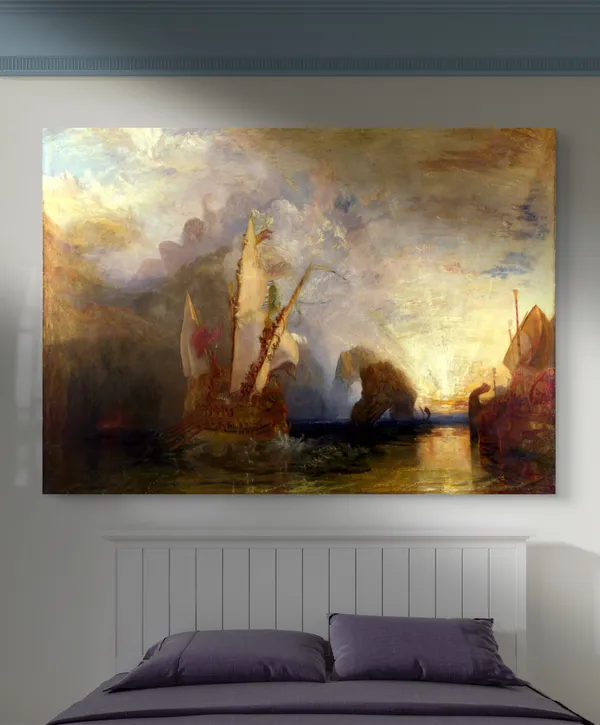
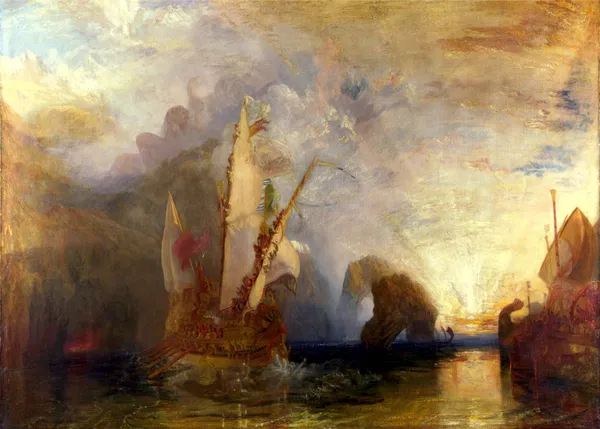



Ulysses Deriding Polyphemus, A Painting by JMW Turner, Wall D�cor, Framed C..More
₹1,399
₹7,590
81% OffHurry Up, Shop Now!
0H:0M:0S
Final Price inclusive of all taxes
Cash on Delivery
Free Delivery
Get it delivered in 4-9 days
size
14x18 In
16x21 In
18x24 In
Product Information
Brand
DECORATUS
Attribute Name
'DECORATUS' curated selection of 5000+ Wall Decor Frames, Paintings & Themes caters to diverse tastes and decor styles. Prompt response to enquiries. Transparent Deals. Custom themes and discounts for bulk purchase
Product Description
Ulysses Deriding Polyphemus (Homer's Odyssey) (1829) : It depicts a scene from Homer's Odyssey, showing Odysseus (Ulysses) standing on his ship deriding Polyphemus, one of the cyclopes he encounters and has recently blinded, who is disguised behind one of the mountains on the left side. The subject of this painting is taken from Book IX of Homer�s Odyssey. It shows Ulysses sailing from the island where Polyphemus, a one-eyed giant, had held him and his men captive. Wearing a helmet and a scarlet cloak, Ulysses raises his arms in victory as he stands on the deck of his ship, below a red banner, looking back at the island. He lifts the flaming torch with which he blinded Polyphemus, whose huge shadowy body lies sprawled across the clifftop that towers above. Luminous sea nymphs and flying fish gather at the ship�s prow as a blazing sun rises through the morning mists. The painting signals the increasing role of colour and light in Turner�s historical landscapes. It also marks the increasingly expressive direction his painting was to follow and anticipates the visionary qualities of his late work. Writing in 1856, the English art critic John Ruskin declared it to be �the central picture of Turner�s career'. *JMW (Joseph Mallord William) TURNER (1775-1851) was one of the most important English Romantic Painters of the 19th century. He is known for his expressive colourisations, imaginative landscapes and turbulent, often violent marine paintings. Turner's imagination was sparked by shipwrecks, fires, and natural phenomena such as sunlight, storm, rain, and fog. He was fascinated by the violent power, turbulence and tidestorms of the sea. It's said that his last words before death were, 'The Sun is God!'
Contact Us
Get in touch directly on WhatsApp!